


Are You Ready If Immigration Enforcement Shows Up at Your Venue?
A practical guide for venue owners, operators, and staff.
This guide is for informational purposes only and is not legal advice.
Guiding Principles to Uphold Safety & Individual’s Rights
Venues are community spaces where everyone should be able to gather without fear. Artists, workers, and community members from a wide range of backgrounds participate in venue programming, and venue owners and operators have a responsibility to help preserve cultural spaces as places of safety, belonging, and joy. This protocol is intended as an informational guide on preparedness if immigration agents or law enforcement target your venue or event.
Our suggested approach centers two core goals: Place Safety First (protect the immediate safety of staff and guests) and Uphold the Individual Rights of every person at our venues.
These guiding principles and the following information can help you achieve this.
Be Prepared: Interacting with immigration agents and/or law enforcement can be intimidating and legally complicated. Preparation provides the best chance of maintaining safety and ensuring everyone at your venue is aware of their rights.
Understand Your Rights and the Rights of Your Guests: Knowing your rights, and helping guests understand theirs, can reduce confusion, support safety, and guide how you respond if immigration enforcement occurs.
Stay Calm, but Don’t Interfere: This is hard! The goal is to de-escalate and maintain safety for those inside the venue who are likely panicked or fired up. However, you should not interfere with the enforcement activities.
Assert Your Rights: Staff and guests should understand their rights. Staff should be prepared to assert not only their personal rights, but a designated staff member should also be on hand to assert the rights of the organization. Guests should be knowledgeable about their own rights.
How to Prepare for Immigration Enforcement Activity
Build your venue’s plan before anything happens. Train staff, set clear boundaries, and establish contacts in advance.
-
Choose one or two trained staff members (e.g., a General Manager or Security Lead) to handle all interactions with law enforcement or immigration agents. It’s important to note that if agents arrive with a judicial warrant, they may proceed without waiting to speak to your designated contact.
All staff, vendors, and touring parties should know to refer any ICE or law-enforcement inquiries directly to the liaison.
The liaison should be provided with comprehensive training and a list of important contacts for each show. See more on this in the next section.
-
Keep an up-to-date list of emergency contacts, including after-hours contact information, that is easily accessible to staff. Here is a sample Emergency Contact Sheet, including the venue owner/GM, lawyer, immigrant legal hotline, and more.
To fill out your emergency contact sheet, build your local partnerships:
Reach out to your state’s ACLU. It’s good to have a contact there and they may have suggestions for local resources.
Find local legal services. Search for your zip code in this directory of legal services. It includes advocacy organizations that might be potential partners, and you can reach out to groups offering legal services to find out if they’d be able to offer support in the event of a raid.
Find your local immigrant-rights groups. These may include statewide coalitions, community legal clinics, or rapid-response networks. For example, Portland Immigrant Rights Coalition (PIRC) in Oregon operates a hotline that community members can call for support.
Reach out to your local business associations and find out if they have guidance or resources for potential immigration-enforcement actions. Ask how they plan to support their members in the aftermath of enforcement actions.
If you do not have or cannot find an existing network or local partner, email culturelab@wscpdx.org for support identifying local resources.
-
Staff should be trained to calmly confirm who is requesting entry. Do not open the door or allow entry until identity and purpose are confirmed.
If someone identifies as law enforcement, staff should call your designated Law Enforcement Liaison - and let the agent(s) know they’re calling a supervisor.
Ask directly whether they are police or immigration agents, and the specific agency where they work.
Look for shield-shaped federal badges or uniforms labeled Homeland Security. Agents in camo or other tactical gear often indicate ICE or CBP.
If an officer or agent demands immediate entrance because they have a warrant, ask to see it, read it carefully, and take a photo of it with your phone. See below for more information about warrants.
-
A judicial warrant is issued by a court and signed by a judge or magistrate. Judicial warrants may authorize entry into private, non-public spaces when valid and within the scope they describe.
An administrative warrant is issued by an immigration agency (ICE/CBP/USCIS). These are not court orders and do not authorize entry into private, non-public areas.
Review sample judicial and administrative warrants ahead of time to help staff recognize the differences quickly. You can take a look at examples here.
-
Who issued it: A judicial warrant will list a court and a judge or magistrate and must include their signature. An administrative warrant will list a DHS agency and may reference DHS forms (like an I-200 or I-205).
Scope: A valid judicial warrant should clearly state who it applies to and what location it authorizes access to, including the correct address and what spaces or items may be searched.
Date: Confirm the date is current and within the timeframe listed. Warrants executed after the date specified are invalid.
Errors can matter: Missing signatures, incorrect address, misspellings, or vague/unlimited search scope can all indicate a defective judicial warrant.
If you have any doubt about a warrant’s validity or scope, seek guidance from legal counsel before acting. If you believe the warrant is not valid, voice your opinion to the officer/agent and then make a written record of your objection. Do not physically interfere with the officer/agent if they demand to execute their warrant.
-
Public areas (like lobbies, foyers, sidewalks) are generally considered open to the public and more accessible to outside parties (such as immigration enforcement agents).
Private areas (typically include backstage, offices, green rooms, and storage) are spaces where people have a reasonable expectation of privacy. These are not open to the general public and require explicit consent or a judicial warrant for access.
Ticketed or credential-restricted spaces often function as private spaces. Clearly define these areas using signage, access control, and staff training to maintain those boundaries.
Post signage identifying “STAFF ONLY / NON-PUBLIC AREA.”
Make clear that backstage, green rooms, and production zones are not open to the public without permission.
DO NOT give permission to the officer or agent to access private areas unless they present a judicial warrant that is valid and specifically identifies the private area involved.
Public vs. private space can be a gray area, and how your specific venue layout is classified may vary. You should consult legal counsel to confirm how your space should be designated and interpreted.
-
Train your staff on the core concepts in this guide and ensure they understand how your venue will respond if local law enforcement immigration agents arrive. This includes establishing internal policies, making information accessible, and clarifying who is responsible for what
Train staff on the concepts in this guidance: Identifying agents, warrant types, the difference between public and private areas, and knowing basic rights.
Create and document internal policies: Determine procedures, designate a law enforcement liaison, ensure staff know where policies live, and keep I-9 files stored separately from other HR or personnel records. Remember you have three days to respond to a Notice of Inspection of I-9s issued by ICE. DO NOT WAIVE this 3-day period.
Develop a clear communications plan for how information will be shared: Internally (ownership, staff, artists/tour team) and externally (audience, public, press) so that messaging remains accurate, timely, consistent, and controlled.
Post and maintain signage: Clearly mark private spaces and any credentialed/ticketed areas that function as private and consider placing simple “Know Your Rights” signage where appropriate.
Incorporate this topic into regular staff briefings: Especially before high attention shows or events where conflict or targeting is more likely.
Make sure staff know where the emergency contact sheet lives and how to access it: Keep it updated consistently.
Practice short scenario walk-throughs regularly: Front of house, security, and box office should all practice applying these concepts under realistic conditions. Here are a few common scenarios:
ICE presence outside the venue but requesting access to the venue’s parking lot which is on private property.
Misinformation or panic spreads during the show (rumor, social media alert, overheard comments).
Detention occurs near the venue.
ICE agents purchase tickets to a program at your venue and then show up in official garb and start questioning attendees.
Recent reporting indicates ICE has issued internal guidance allowing officers to forcibly enter a residence based solely on an administrative immigration warrant (Form I-205), without a judicial warrant. Read more about this development here.
Our Guidance: Continue to assert your Fourth Amendment right to require a judicial warrant, document that you have done so, and do not physically obstruct agents.
Before anything else, remember that everyone inside the venue has basic rights during an interaction with immigration enforcement, regardless of immigration status. These rights help guide the rest of your response.
Right to remain silent: You do not have to answer questions about immigration status, citizenship, birthplace, or documentation.
Right to privacy: Agents cannot enter private, non-public areas without a valid judicial warrant signed by a judge, unless the company gives consent. DO NOT GIVE CONSENT.
Right to counsel: Anyone may request to speak with a lawyer before answering questions or providing information.
Right to record: You may film or document interactions in public areas or on your property as long as you do not interfere with law enforcement activity.
While these rights protect you and your guests, do not interfere with agents’ actions or obstruct their movement in any way. Also be aware that a refusal to answer questions or provide evidence of lawful presence in the U.S. could result in being detained by ICE or law enforcement.
When immigration enforcement agents appear at or near your venue, your priority is to stay calm, follow your internal protocol, and keep people safe. The steps below are designed to help your Law Enforcement Liaison take clear, immediate and appropriate action.
During an Incident:
If Immigration Enforcement Arrives
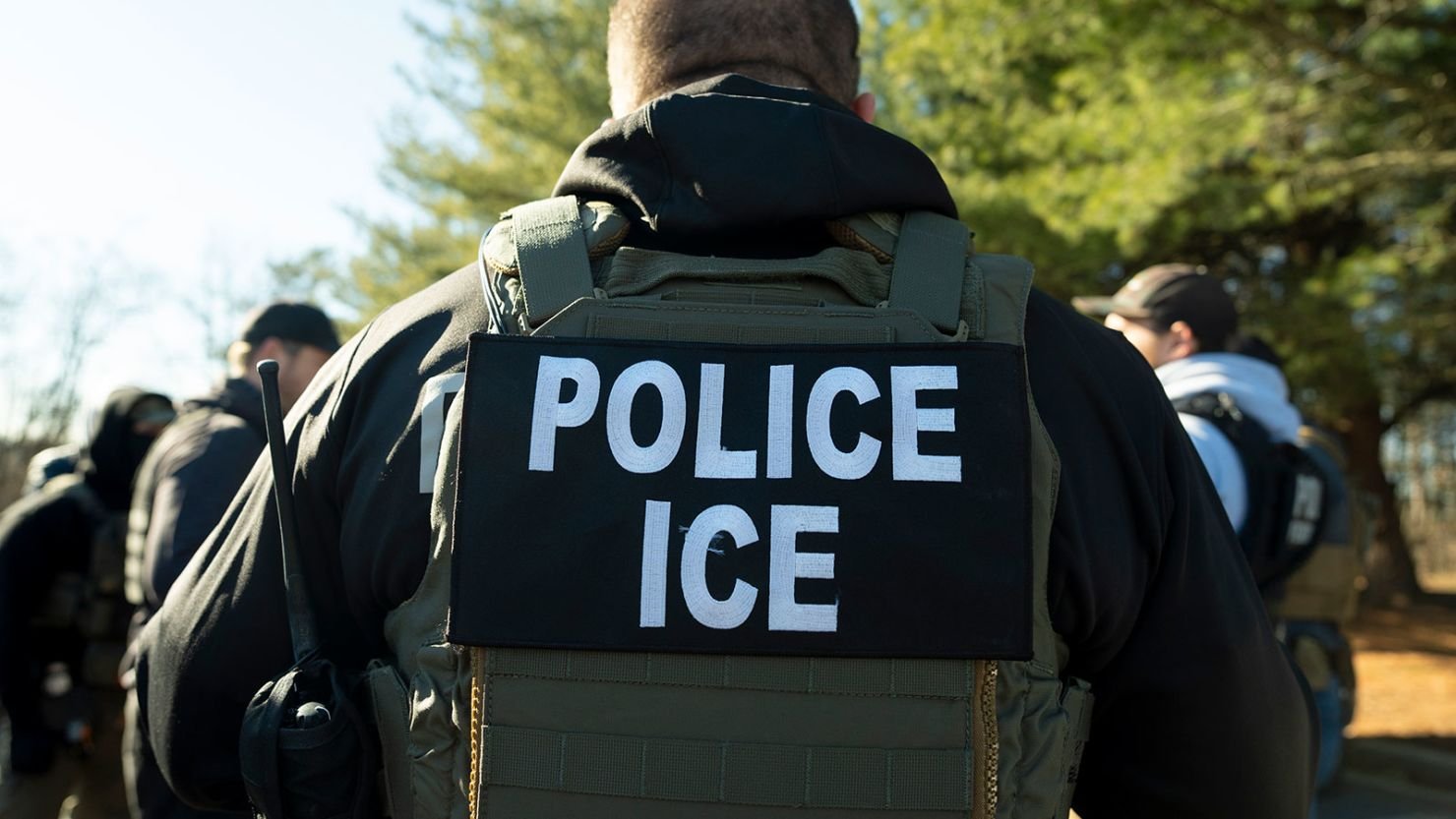
1. Activate your trained staff. Immediately alert your Law Enforcement Liaison (LEL) and contact your rapid response hotline.
2. Do not allow entry without a judicial warrant. You are not required to let agents into non-public areas; ask them to remain outside or in a clearly public space while the LEL reviews their documents.
3. Verify agents’ ID and warrant. Check the agents’ identification and any warrant from outside or through a door or window, if possible, to confirm their authority and the warrant’s validity. If you are unable to take a picture of the warrant and the agent’s information while remaining inside, step outside (rather than letting them in) to take the picture and immediately send it to the LEL.
4. Protect guests, artists, and staff. Keep people calm, use internal channels for staff coordination, and avoid actions or announcements that could create panic.
5. Share only what is legally required. Do not provide information or records (including ticketing or artist information) without a judicial warrant or subpoena and route all questions through the LEL or legal counsel. As a reminder, providing false or misleading information can carry legal consequences.
6. Document and support if someone is detained. Record from a safe distance and contact legal support on their behalf with consent.
After an Incident
After the incident has passed, your focus shifts to stabilizing the space, supporting those impacted, and carefully documenting what occurred. These steps help protect your community, strengthen your processes, and prepare your venue for any future incidents.
-
Prioritize keeping artists and audiences calm, pause performances if needed to prevent panic, and only resume or close the event once the situation is clearly safe and stable; coordinate with tour management if rescheduling or refunds are required.
-
Document details as soon as possible while they are fresh, noting key information such as time, agency, actions, and any documents shown, and store everything securely. Be sure to obtain the names of any person detained and ask the officer/agent where they are taking that person. If the officer/agent is physically removing any documents or equipment (like laptops, I-9 forms, etc.) make sure you ask for a detailed list of what is being removed. If they simply indicate they are taking “boxes of documents”, register your objection, ask again for a detailed listing, and if they refuse, try to document what you believe has been taken.
Once the agents/officers have left the premises, let the remaining staff and guests know that they have left.
-
Hold a debrief with venue leadership, your Law Enforcement Liaison, and involved staff to review what happened, what worked, and where clarity is needed. Use this protocol as a reference; update any policies, signage, or training based on what you learned; and notify your legal advisor, Western States Center, and/or a local immigrant-rights organization for additional debrief support and reporting.
-
Give people time and space to regroup before leaving the venue, as these situations can be stressful and disorienting. Offer support to anyone impacted and consult trusted legal or communications advisors before making any public statements. Western States Center can assist with messaging requests at CultureLab@wscpdx.org. Keep all summaries and identifying details private and confidential.
-
Venues are positioned to shape how a community understands and responds to ICE raids and other events that threaten community safety. Consider speaking out publicly to condemn immigration enforcement intended to spread fear and separate families. This message can be tied to an update to staff, patrons, and the broader community about what occurred and the steps your venue took, grounding your message in your core values. You might emphasize commitments such as keeping everyone safe, calm, and informed, for example: “Our venue is built on safety, dignity, and care for everyone who walks through our doors, and our actions today reflected that commitment.”
-
If someone was taken, reach out immediately to the person’s family, if you have that information. Provide any information the agent/officer shared about where they were taking the person. The detained person’s family may already have their own immigration attorney who they should contact. If appropriate, contact your local immigrant rights organization or rapid response hotline for legal support. Make a plan with legal aid and your partner network to determine next steps, such as coordinating any immediate legal or community assistance they may need. Activate your partner network to help provide guidance and support for the detained individual and their loved ones, if desired.
-
Communities have been successful in getting people who have been detained by ICE released, even in recent months. When people come together - community members, immigrant rights organizations, and local businesses - their collective action can be a key factor in pushing for someone’s release or drawing urgent attention to the situation. In New York, for example, a restaurant worker was released after coworkers and regulars rallied around him; in Chicago, community pressure helped secure the temporary release of a Venezuelan immigrant so he could donate a kidney to his brother; and in the Bay Area, a local organizer received a temporary reprieve after community members took action. Depending on the situation, consider partnering with trusted immigrant rights groups to help drive an organizing response.
What Can Venues Do in This Moment?
Harmful and aggressive immigration enforcement impacts cultural workers and the communities venues serve. When staff, musicians, families, and audiences are targeted, the local cultural economy suffers as shows are cancelled, touring becomes less stable, and community attendance drops. Venues have a role to play in protecting their communities, their audiences, and their bottom line.
Build collective infrastructure locally, regionally, and nationally. Connect with other venues and cultural spaces in your community. For example, in Washington State, the Washington Nightlife and Music Association (WANMA) is a statewide association that organizes music venues to advocate collectively on policy that matters to them. Nationally, NIVA is a critical space for independent venues to connect and strategize together.
Communicate the impact of immigration enforcement to elected officials. Our representatives don’t always understand the impact of policies. Share your ground truth: focus on related show cancellations, staffing shortages, decreased community participation, production or tour delays, rising costs, and the ripple effect this can have on local businesses. Show the impact on local economies, small businesses, and cultural life in your community.
Join or work with business associations and community coalitions. Chambers, regional business associations, and other economic development networks can amplify venue concerns and share the advocacy burden with other industries also being harmed. If your venue is run by a private nonprofit, consider joining a statewide immigrant justice coalition such as Oregon for All, for example.
Leverage your platform and power as a business and community leader. Independent venues carry significant weight in their communities; you create jobs, drive nightlife, support tourism, and anchor cultural life. That influence matters with your neighbors and elected officials. Consider issuing or co-signing statements, mobilizing peer businesses, or showing up at city and county meetings to make clear that harmful immigration enforcement threatens workers, artists, and the broader cultural economy.
Get involved in your community. Consider reaching out to local organizations advocating for civil rights and against federal overreach. Preparing to respond to immigration enforcement can be a good prompt to reach out to groups that could be important partners, and it’s great to have those relationships in place in advance. There’s also the possibility of deeper partnership around sharing space, driving business to your venue, and more.
Want to do more? Reach out to Culture Lab. We can help venues connect with other cultural spaces facing similar challenges. Our goal is to share strategies and strengthen our collective voice to push back against harmful policies in order to build a culture sector that can respond together. To learn more, contact us at CultureLab@wscpdx.org.
Additional Resources
To request a training on this guidance for your venue or team, complete this Training Request Form. If your request is time-sensitive, please email CultureLab@wscpdx.org.
PNW Support Resources
Oregon
Portland Immigrant Rights Coalition (PIRC)
Hotline: 1-888-622-1510
Washington
Washington Immigration Solidarity Network (WAISN)
Hotline: 1-844-724-3737
Northwest Immigrant Rights Project (NWIRP)
Idaho
Questions to Ask a Lawyer
What parts of our venue would be considered “private” and what parts would be considered “public”?
Are there design/layout or operational shifts we could make (moving box office, creating wristband restricted zones, securing backstage access, signage) that strengthen clarity around non-public spaces?
What are the laws in my city, county, and state regarding ICE and local law enforcement coordination? Are there city or state level protections or laws specific to businesses?
What should be included in our safety or internal escalation plan if ICE is acting illegally?
Glossary
-
A federal agency responsible for, among other things, enforcing federal immigration laws including conducting I-9 audits and apprehending/removing individuals who violate immigration laws.
-
A federal agency responsible primarily for border security and immigration inspections at ports of entry.
-
A court-issued warrant signed by a judge or magistrate. This type of warrant may authorize entry into non-public spaces within the scope described.
-
A warrant issued by immigration agencies (such as ICE or CBP) that does not authorize entry into private, non-public areas.
-
Areas of a venue not open to the general public where a reasonable expectation of privacy applies (backstage, offices, green rooms).
-
A staff member you designate and train to communicate with ICE, CBP, or police on behalf of your venue and to review documentation.
Legal Disclaimer
This material is provided for general informational purposes only and does not constitute legal advice. Laws and policies vary by state. Venue operators should consult with an attorney licensed in their state regarding local law, warrant review, and specific enforcement situations.
About Culture Lab
Culture Lab is a Western States Center program that partners with artists, cultural leaders and venues to catalyze collective action and resilience. Launched in 2020, Culture Lab has convened artist and venue cohorts across genres and geographies to build community, take bold public stands, and push back against organized bigotry. Through this work, Culture Lab supports cultural leaders to mobilize audiences, create robust community-based responses to bigotry that are driven by the arts, and build cultural power in defense of inclusive democracy.